How many times have you heard this said while you’re building a product:
Listen, a few customers have requested this already, a number of us here love this feature. Let’s just build this and see how well it does. Analytics will tell us if this is a keeper or not. This is the quickest way to learn if people like the feature.
One of our good friends and loyal customers who IPO’d last year (can’t mention their name unfortunately) took this very approach: Build it, launch it, and see how well it does. When I asked him how well this approach worked out for him, three things were apparent:
”What if you could test out an idea without implementing it, from a mockup or a wireframe?” I asked."After all, why do you have to implement stuff that customers won’t use if they can tell you ahead of time?"
“Oh, you mean like a focus group? That’s too much time and effort," he said.
“No, I mean quickly mocking something up and asking customers a question about it."
People really get stuck when it comes to testing things before building them. Engineers, product managers, and designers just want to build stuff to solve problems then release it. However, a few key decision makers doesn't adequately represent thousands of would-be customers. If you’re building a product for customers (not just for yourself), you’ve got to test your assumptions early on with your potential users.
At ZURB, we’re huge proponents of testing any assumptions we might have before we implement a change or the new feature in a product. It’s in our DNA. We saw that there was a hole in the market as far as tools go for this very problem. We built Verify to help ourselves, as well as many others who are building products, test assumptions before implementing features.
One side of the problem is having a tool that you can upload your concepts into, attach a question, and test out those assumptions. The other side is having an experienced set of passionate people that can give you great feedback about the changes and updates you’re thinking of implementing. These are the types of people that have had enough of sucky sites on the web and want to improving the web as a whole.
We are excited to launch our own service called Enroll to build a community that helps make the web a better place by giving those building products honest and actionable feedback.
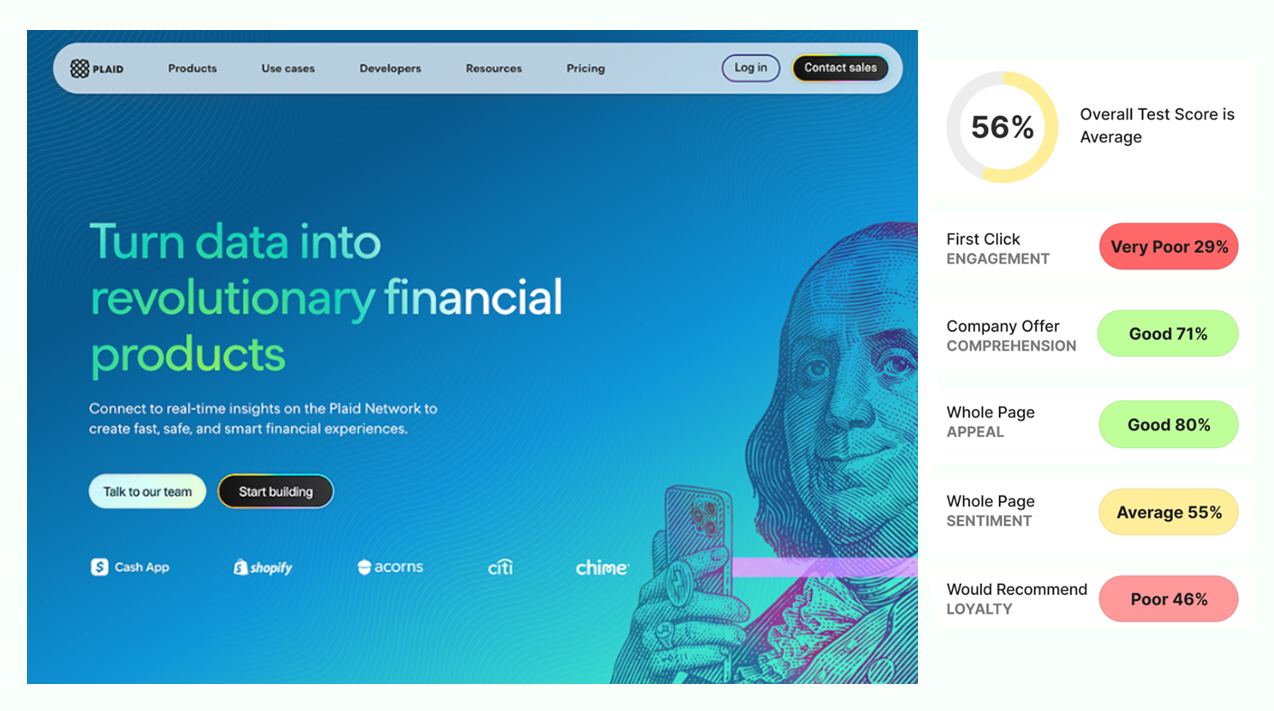
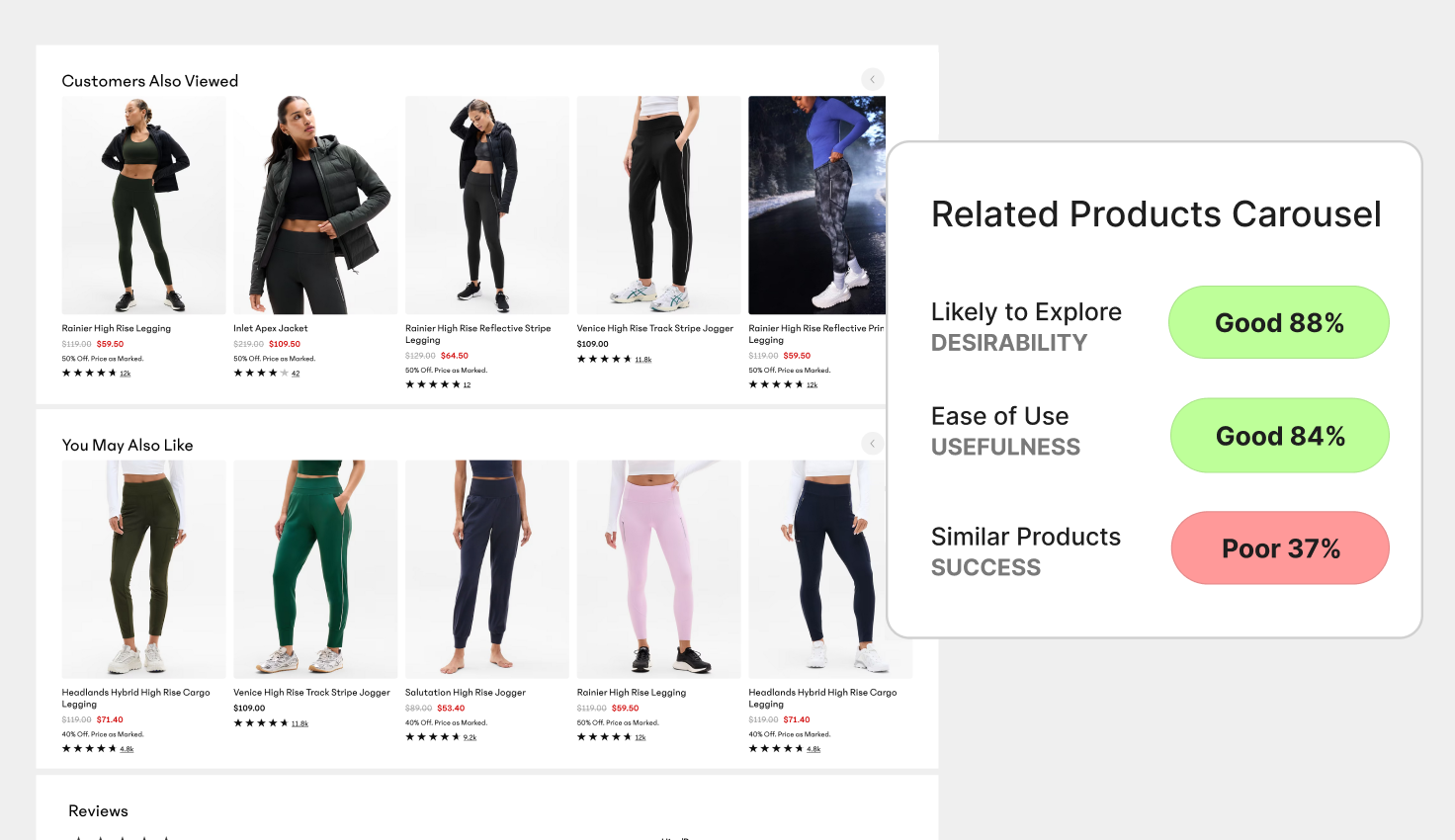
As you can see from these screenshots, everyone who signs up for Enroll will be able to track the quick 5 second tests they've taken through their own dashboard as well as earn different badges as rewards for tasks completed.

If you are excited about helping big brands solve their product problems then you’re the right type of person to give Enroll a shot. We're looking forward to hearing how all of you like Enroll. You can sign up now by following the link below. As always — feel free to reach out to us at support@enrollapp.com.
Steven Levitt, influential economist and author of "Freakonomics," said it best when it came to the typical business manager's obsessive need to be right in a recent podcast:
“What I’ve found in business is that almost no one will ever admit to not knowing the answer to a question. So even if they absolutely have no idea what the answer is, if it’s within their realm of expertise, faking is just an important part.
I really have come to believe teaching MBAs that one of the most important things you learn as an MBA is how to pretend you know the answer to any question even though you have absolutely no idea what you’re talking about.
And I’ve found it’s really one of the most destructive factors in business is that everyone masquerades like they know the answer and no one will ever admit they don’t know the answer, and it makes it almost impossible to learn.”
Most people in business are wired to get it “right.” Put on the spot, pressed for time, squeezed by competition — you feel obligated to provide lots of answers on the spot and project confidence, above all. That makes you look good, pleases your boss, and gets you ahead.
When you’re wired to get it right, the risk of getting it wrong seems huge. Failure feels crushing and steers you away from uncertainty or taking risks, pulling you more toward the warm embrace of schedules, requirements, and niggling details.
As seductive and easy as it is to do, managing for the “right” answers has two critical flaws that will hurt you and your team in the long run:
Design leadership can cure this reductive management style. Those who lead should feel comfortable saying, "I don't know, but I know how to find out." They should inspire a team to take small risks, collaborate effectively, and run toward uncertainty.
Design methodologies are leaders' safety net so they don't feel the need to act like they have all the right answers. Two critical ingredients of effective design leadership are:
A truly effective leader embraces uncertainty and admits to not having all the right answers to start. By doing so, managers can learn to check their hubris at the door and open up their team's ability to ask dumb questions, listen hard for answers, and really learn. After all, as Levitt hinted at in his comment, it's this ability to collectively learn that makes a business healthy, constructive, and innovative in its marketplace.
Not too long ago, product designers had a lot more control. As designers, we knew exactly which device and software our target users would use to consume information and interact with our product. We knew the specific interactions that users would use and how they would experience our product. So it was easy to rely on traditional task analysis and customer profiling to figure out how an interface should work. Not anymore!
Nowadays, there are thousands of different devices and tons of different ways people can consume information and interact with our products. Think about it. We have absolutely no idea whether the user will use a TV, a laptop, a phone, a tablet, or some other hybrid device to use our product. Then there's email, Twitter, Facebook, RSS, or whatever else to consume information — we don't always know which of these a user will turn to.
We've lost control of how customers will interact with our products.
It means that we can no longer focus on building “a thing” to solve a very specific situation. We need to build a more holistic solution to a bigger problem. We need to understand the drives, blocks, emotions and beliefs of our users at key conversion points as they use our products across all the devices and use cases.
Eric Schaffer, of HFI International, discusses this very problem and how Persuasion, Emotion, and Trust (PET) analysis helps product designers build holistic solutions.
Times have changed. The old ways of task analysis and customer profiling don't work anymore. We've got to think bigger when it comes to the people using our products and how they're interacting with them.
Think of this — a typical website visitor has an attention span of 5 seconds the first time they see a webpage. Seems like a long time? Try it yourself: go to a webpage you’ve never visited before, count to 5 in your head, and leave the website. What do you remember? If nothing grabbed you in that first 5½ seconds (or even the first 2 or 3 seconds!) you probably would have been out of there.
Five seconds is all we've got as product designers to capture a potential customer’s interest. That initial visual, interaction, or text someone sees is our opportunity to leave the most powerful impression on them. If we screw up in these first few seconds, chances are we lost them.
Take a look at this great example from Penny Arcade at what happens when a video game fails to engage users in its opening moments:
So the question becomes, how do we capture their attention in those first 5 seconds? Back in the early days of the internet people used to think flashing buttons and blinking text was the answer. Thankfully that did not catch on for too long. These days people are trying to use design and usability to catch potential customer’s attention.
Let's take a look at three points in the video and see how these points can be used to capture attention in those first 5 seconds:
It's easy to get consumed by the mad rush to release a product and just throw up something that doesn't really engage a potential user. We’ve seen this happen one too many times. This is precisely why we released a simple little app called Clue to help people test what potential customers remember after looking at their webpage for 5 seconds. It’s a simple way to figure out if you’re displaying the right visuals and text to grab your customer’s attention.
Remember — if we don't get their attention in the first 5 seconds, then it might never happen since they’ll just leave.
At ZURB, our workday gets packed quickly with client projects and our own projects. A tiny distraction can upset our workflow and destroy our productivity. So when we read this Inc. Magazine article on the seven things highly productive people do, it got us thinking about what distracts us throughout the day.
Think about your workday. What distracts you? Email? Multitasking? Or feeling overwhelmed by a large project? Staying on task and meeting goals takes deliberate practice. Below are three pieces of advice that keeps us from getting too distracted, which we wanted to share with you.
How Flickr Co-Founder Caterina Fake manages her email.
When it comes to email, it's easy to allow a swelling inbox consume your entire workday. That's why Inc. Magazine suggests picking two or three times out of the day to check your inbox. Believe it or not, the article's suggestion is something we've heard before from a few influencers.
Take Ben Blumenfeld, communication design manager at Facebook, for instance. He doesn't think of email as a "must do" task, saying he thinks of responding to an email as optional. We know that's hard. Email is an addictive distraction. We have to respond quickly or it might seem that we're ignoring the person on the other end. However, when email dictates your day, you lose hours you could be using to accomplish a task or goal.
Scribbling down a lofty goal on the top of your task list that says build an awesome app that translates any language into Klingon is a "sure way to make sure it never gets done," says Inc. By working backwards, says the article, you can slice the work up into smaller, more manageable bits. That's something we already do as part of our design process. We call it timeboxing, which forces us to limit what we're doing by how much time we actually have.
Another way we put a fire under our butts is by planning a 5-day outlook. Breaking down a huge project into smaller time chunks keeps us from getting overwhelmed and off task.
The biggest distraction of them all is multitasking, which researchers say saps the brain. In the rush to complete a project, it's nearly impossible to not juggle several different tasks. So Inc. Magazine's suggestion to completely stop multitasking doesn't really work. This Harvard Business Review article suggests that multitasking can't be avoided and may actually be beneficial to entrepreneurs.
The trick, however, is to optimize your multitasking and know the cost of switching gears on your productivity. When there's too much structure in your day, it's hard to have the flexibility to switch gears on multiple tasks. Say, for instance, your day is scheduled around meetings, then multitasking would just get in the way. In other words, what's true for one person isn't always true for everyone. Multitasking has to be taken on a case-by-case basis.
While these are the ways we stay productive, which we hope you find useful, we know that they don't always work for everyone. Your workflow may be different from ours. Somedays you may have to multitask, other days it's not possible. In end, however, stay focused and it's in your hands to figure out how best to do that.
Browsing Quora recently, a question on product design caught my eye: "What are the key differences between ‘Normals’ (normal mainstream users) and tech early adopters?”
It's a common concern of people working on new products — most of you have probably seen variations on this graphic:

By definition, early adopters make up only a small percentage of the typical-user base of a successful product. New products and services tend to live or die based on their ability to cross over into a mainstream audience (see Geoffrey Moore's classic "Crossing the Chasm").
Most Quora answers focused on early adopters’ tech savviness and comfort using social apps and other technologies, but that’s only part of the story. There are actually two types of early adopters: I like to call them "Tire Kickers" and "People With Their Hair on Fire." Spotting the difference between these groups is key to identifying the right kind of feedback and putting together the best roadmap for you product.
Let's take a look:

Tire Kickers have a general interest in the field and like to play with new technologies, but most of the time won't convert to long-term users because they don't have a need for it. These are your tech bloggers who try a product then post about it. They like to be first, and tend to be very vocal with their opinions — but they may not always be the best source of feedback, because they have so little in common with mainstream users or people trying to solve a specific problem.
However, don't dismiss Tire Kickers out of hand. They can be valuable allies when it comes to a blog post or word-of-mouth. However, they're not likely to become long-term users of the products they try because their attention span casts a wide net.
In other words, they'll kick the tires, check out the interior, maybe take a car out for a test drive and tell their friends how cool it is, but, in the end, they don't buy the car.
When it comes to early adopters, People With Their Hair on Fire (PWTHOF) are the ones to focus on. These are the people who use your technology because you're solving a pressing problem for them, regardless of whether they typically fall into the role of early adopter or not. These are the ones who will tell you how your product fits into their daily lives, how they use it to solve problems, what they love, and what they hate.

Create a dialogue with them and be responsive. Because your product solves a problem for them, these users tend to be forgiving of bugs or usability oddities. They’ll often be willing to help test out new features and give honest feedback.
Why are these people important? Well, PWTHOFs and mainstream users are just two sides of the same coin — users who are typically mainstream that might become early adopters when a product fulfills a real need for them. This means two things: 1) they'll be more typical when it comes to comfort with technology and ability to learn new features, and 2) they're likely to know other people with similar characteristics. Both of these factors are invaluable when it comes to designing for your users.
So if the PWTHOFs are key to your product's future, and Tire Kickers will fall by the wayside, how do you identify which is which?
Well, there's no substitute for talking to people. Respond to users on Twitter, reach out via email, have conversations on the phone. Once you're talking one-on-one, it'll be easy to see who's been diving deeply into features and who's just giving surface feedback.
Win over those PWTHOFs, and not only will you have a fan for life, but you'll be well on your way to winning the hearts and minds of mainstream users.

Last year, we went through a hiring frenzy, which we talk about in last month's newsletter. So we've been thinking a lot about what goes into hiring a talented designer, engineer, and even an editor who rocks the pen. The work, however, doesn't end once you get warm bodies in the building. So when we ran across this Forbes' article on the top ten reasons why large companies lose good talent, we couldn't help but ask — how do you keep good product design talent?
We’ve been answering this question for as long as we’ve been around. Keeping great talent takes a lot of work, but it’s worth it. Below are three pieces of advice which have helped us retain talent over the years which we wanted to share with you.
A bad boss is one reason awesome talent jumps ship, says Forbes. To keep those employees, Forbes says, just move the bad manager to another job in the company. That's not the only tactic companies can use — they can give their employees more autonomy.
Dan Pink, author of "Drive," favors giving workers more freedom. He has a great example of a company culture that supports autonomy. Once every quarter, an Australian company gives their employees 24 hours to work on whatever they want. Amazing work results from those employees in that 24 hours, says Pink. Autonomy can empower designers to set their own goals and expectations, fostering a sense of ownership when it comes to their work.
Number two on Forbes' top ten — failing to find a project that ignites an employee's passions. Forbes states that money and power don't drive top talent who want to be part of something bigger than themselves. He's right, it's not about the money, but feeding a designer's motivations instead. What kind of pressure do they thrive in? How do they approach a project? Are they better as problem solvers or as idea generators? Understanding a designers' motivators and addressing them can go a long way in sparking their passion for a project.
One thing that Forbes doesn't address is culture fit, which is a huge issue nowadays for several companies. That's because culture fit, in some ways, is much more important than the skills a person has. Skills can be taught. Teaching someone to fit into your work culture can't. That's why companies, such as Fog Creek Software and Penny Arcade (and us!), work hard to determine if a person is the right culture fit.
Keeping an employee happy and productive at a company can start before they even walk in the door by getting a chance to know who they are and whether they fit within your company culture.
Maybe it's the New Year, but a recent tweet from Jack Dorsey, co-founder of Square who's widely known as the creator of Twitter, caught our eye:
"My resolution for the past few years: simplify."
— Jack Dorsey (@Jack) January 1, 2012
Jack's been singing that song for awhile, and it's not the first time he's said that. Around this time last year, he was on Charlie Rose, where he talked about making Square's credit card paying app and device simple. Turns out, it wasn't all that simple to make. Here's how Jack put it last year:
It turns out it’s really complex. It’s really complex to make something simple.
In the past decade, more and more start-ups have been intensely focused on making their products simple so they can stand-out from their competitors. After all, who doesn't want to make a product simple and easy to use? However, it's easy to take a surface approach, mistakenly thinking that a simple product isn't complicated to create.
Remember what it took to create a balloon? Hardly simple, right? Here's another example: the puzzle game Bejeweled 2. The game play is simple, just move and swap the gems to match three like gems. Under the hood, however, is another story.
Take a look at this video from the folks at Penny Arcade. Once the video starts playing, fast forward to about 2:08 and you'll notice all the steps it takes to move a player from one level to another.
Not so simple after all, is it? Yet the player is never once aware of the complexity behind building such a simple game. Which brings us back to Jack Dorsey, who says in his interview with Charlie Rose that the best products are the ones that vanish in the hands of users, where they're not even aware of the complexity behind it.
This year we’ve hired two new engineers, three new designers, and an editor (that's me ... more on that soon) after an exhaustive search. Hiring great talent to build products online is tough. Not just because there are so few of them, but because it’s so hard to figure out if they’ll fit into your environment. Weeding out people that don’t have the skills you are looking for is easy, but how do you determine if the person is the right culture fit?
Culture fit is a huge issue, and, in some ways, much more important than the skills the person has. You can teach a person to have the skills, but teaching them to be able to fit into your culture does not work. Joel Spolsky of Fog Creek Software is a perfect example of this. He started his own company because he couldn't find a company culture in New York that was a fit for him. Now he makes culture fit his top priority when hiring new engineers at Fog Creek
So the question becomes: How do you hire for culture fit? How do you make sure they fit into your culture before you offer them the position? Penny Arcade recently published a great example of how they tackle this problem. Check out the process they go through to ensure the person they are hiring is a culture fit:
Notice how they went about hiring Erika. They went bowling and played Pictionary with all the candidates, trying to engage them more as people. They weren't searching just for a warm body for the office, they were searching for a friend. Hanging out with your candidates helps you figure out if they'll fit in to your company culture.
What Penny Arcade does is very similar to how we figure out if a candidate is the right culture fit at ZURB. During our one day interview process, we try our best to get a sense of how the candidate would respond to our culture. How would they take our joking? Our scrappiness? Our chaos? Airgun NERF bullets flying at them? It's absolutely a HUGE part of making the decision to hire someone. Everyone at ZURB interviews the candidate and has to agree to hire the person in order to bring someone on.
This focus on culture fit carries over to our ZURBjobs board. We ask every company that lists on the job board to provide fun pictures of their culture as well as fun facts about games, perks, and activities they have at the company that we can share with potential candidates. It helps us match the right type of people to their job listings.
When it comes to hiring someone to work for you, try giving them a glimpse of your culture and get a chance to know who they are, not just what they can do.
Yesterday’s tweet from Chris Dixon, a well known investor and founder of Hunch, caught our eye:
"Desingineer" -> mythical person startups are looking for who can do UI, UX and also excellent front- and back-end coding. ^TS
— chris dixon (@cdixon) December 19, 2011
In the past few years people have started paying an insane amount of attention to “great design and usability of products." Why is that? Well, entrepreneurs, CEOs, and business folks are starting to realize that “Design” is their competitive advantage. Most of the technology capabilities have already been commoditized. Design has not. So it is no surprise that "great designers" are in high demand.
However, most people still have no idea what makes up a great designer or how great designs are made. To most a great design simply means: pretty, hand crafted pixels on your website that take your breath away. “Just give me a pretty graphic, with some simple wording, and a nicely designed button and I’ll slap it on my site” — this is how most people think about a nice design for a site, and it’s wrong.
Eric Schaffer, founder of Human Factors International, does a phenomenal job outlining the central element of great design in this video — the user:
The word "user" is unfortunately missing from most of the work typical "designers" deal with on regular basis. Take a look at this job listing which came up first on Indeed for "Designer in Bay Area". How many times does the word "user" appear in it? Zero times. Yet it should be the basis for their entire role.
The difference between people who just craft pretty pixels and images and the people who think about the drives, beliefs, feelings and needs of their users is what makes up amazing designers and products. Once you can understand this difference, you’ll understand what a great designer does and why there is so few of them.